
 By
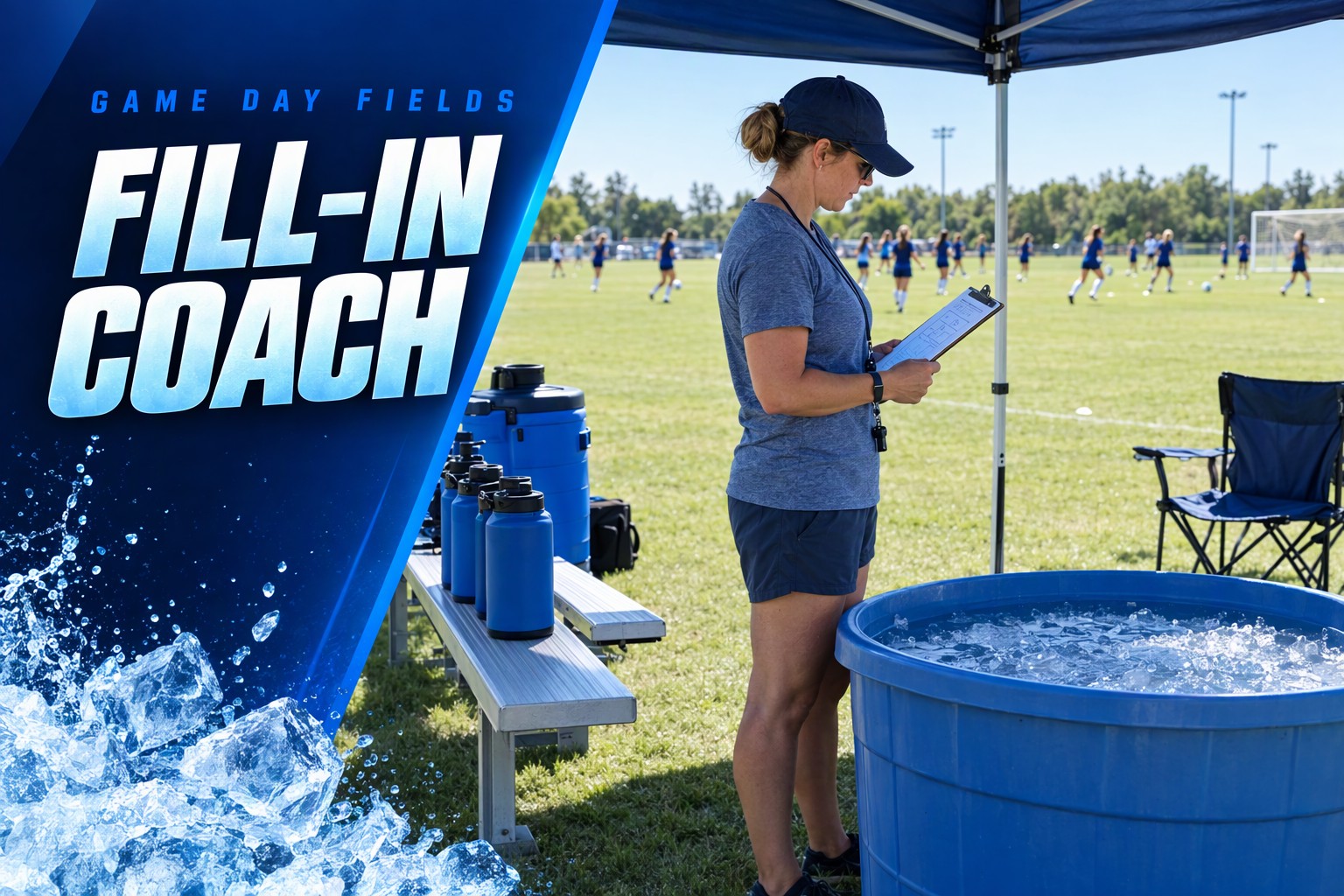
Sooner or later, the regular coach cannot make it. A work trip, a sick kid or a flat tire, and suddenly an assistant or a parent is running practice on a field your team rents. On a cool evening, that is no big deal. On a hot day, the fill-in coach is now the person in charge if a player goes down, at a field they may have never set foot on. Here is how to hand off your heat plan so the person stepping in has everything they need.
Why a rented field makes the handoff harder
At a school or a home field, a fill-in coach can usually find someone who knows the place. At a rented field, the booking is often in one person’s name, and that person holds most of what matters: the gate code, the field number, the owner’s phone number, where the water is and where the team sets up the cool zone. If all of that lives in the regular coach’s head or phone, the fill-in starts the day without it.
Have a backup named before you need one
Do not wait for the morning of a hot game to find someone. At the start of the season, pick one or two adults who could run a practice or game if the regular coach is out. Make sure they have seen the field, know where the team sets up and have a copy of the heat plan. Our guide to putting your heat plan on one page shows what that copy should include.
What the fill-in coach needs to know about the field
Send this to the fill-in coach in writing, not just in a quick phone call:
- The field name or number on the booking and the start and end time.
- The street address to give 911, the entrance closest to the field and the best way to drive up to it.
- Any gate code, lock or key, and who to call if it does not work.
- The name and phone number of the field owner or manager.
- Where the drinking water, restrooms and shade are, and what the team has to bring.
- Where the team puts the tent and the cooling tub, and who is bringing the ice.
Our guide to giving 911 directions to a rented field shows how to write out the address and route so a dispatcher can use it.
Hand off the gear, not just the plan
A heat plan does not help if the tub and the tent are in the regular coach’s garage. Agree on who picks up the team bag, the tent, the water jugs and the cooling tub, and who buys the ice on the way. If the regular coach usually brings everything, make that pickup part of the handoff. Our heat kit for a rented field lists what belongs in the bag, and our ice plan for a rented field covers how much ice to bring and how to keep it cold.
The tub should be filled and ready on the sideline before practice starts, not left in a car. Our guide to bringing a cooling tub to a rented field covers setup.
Walk the field when you arrive
If the fill-in coach has never been to the field, have them get there early and walk it before players arrive. Find the entrance the ambulance would use, check that the gate opens and set up the cool zone close to the team’s sideline. Our quick heat walk-through when you arrive has a full list to follow.
Name the jobs again for that day
The adults at practice may not be the usual group. Before the first drill, the fill-in coach should say out loud who calls 911, who runs the cooling, who meets the ambulance at the entrance and who stays with the rest of the players. Our guide to game-day heat roles lays out each job.
The regular coach should also pass along anything the fill-in needs to know about the players, like a player who has been sick that week or is just back from time off. Keep a headcount at every break, and pair players up so no one goes missing. Our headcount and buddy plan shows how.
Give the fill-in coach permission to keep it easy
A fill-in coach may feel pressure to run the full practice the regular coach planned. On a hot day, tell them plainly that it is fine to add more water breaks, move drills into the shade, shorten the session or call it early. Our guide to making the heat call walks through those choices.
Let parents know ahead of time who is running practice and how to reach them, so pickups and questions go to the right person.
Warning signs to watch for
A player who is dizzy, sick to their stomach, has a headache or looks wiped out should stop, drink water and rest in the shade with an adult beside them. Call 911 right away if a player is confused, slurring words, passes out or stops acting like themselves.
If a player goes down
If a player collapses in the heat, the adults on your team are the first responders until the ambulance arrives:
- Call 911 and start cooling at the same time.
- Cooling should start within 10 minutes, using cold-water immersion with ice agitation.
- Cool first, then transport. The goal is about 102°F within 30 minutes.
Take off whatever gear comes off quickly, but never delay cooling to remove gear.
Around 104°F, the body loses its ability to regulate its own temperature. Exertional heat stroke is 100% survivable when it is recognized fast and the athlete is cooled on the spot.
While one adult cools the player, another keeps the rest of the team together in the shade and away from the crowd, and the person named in the plan goes to the field entrance to meet the ambulance.
Free help from National Stay Cool Day
Use the National Stay Cool Day cooling station checklist to set up your own cool zone, and make sure every adult with the team knows the warning signs of exertional heat stroke.
Take the next step: build your heat emergency action plan with our free heat safety tools, then sign up your school for National Stay Cool Day on April 8, 2027. Both are free.