
 By Gamedayfields
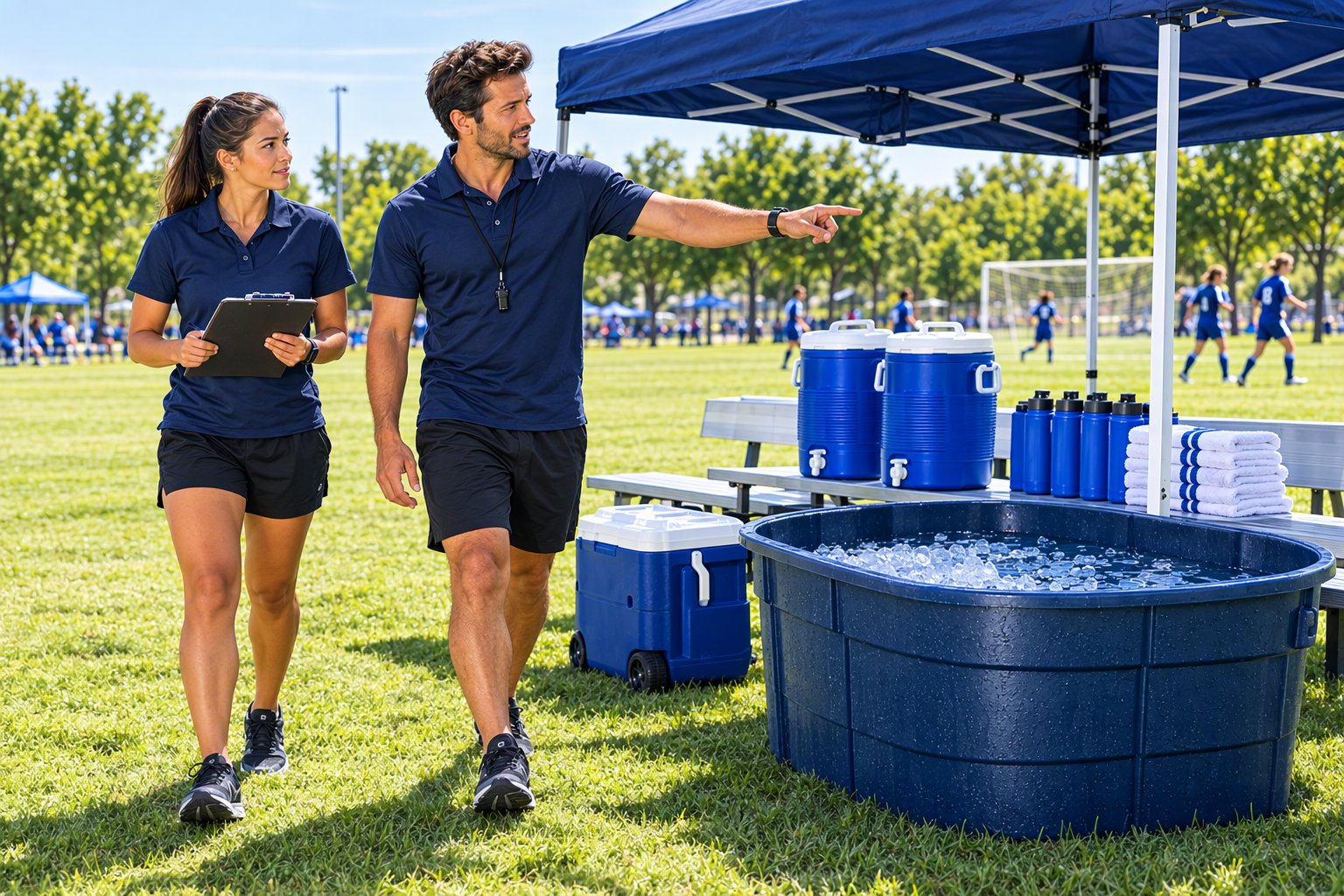
A rented field is never quite the field you pictured when you booked it. The shade moved, the spigot is locked, the gate you planned to use is chained. Take a few minutes when you arrive, before anyone starts running, and walk the field with heat in mind.
Walk the sideline first
Find where your team will actually sit. Is there shade now, at this hour, or only in the photos? If not, decide where the pop-up tents go and set them up before warm-ups. Check how hot the benches and the playing surface feel to the hand. Turf and metal bleachers can be much hotter than the air, so plan breaks in the shade, not on the bench.
Find the water
Locate the closest working spigot or fountain and test it. If it is off or too far away, send someone for more water now, while there is time. Put coolers where players pass on every break so nobody has to ask. Set the break schedule with the coaches and officials before the first whistle, not halfway through the first half.
Know how EMS gets in
- Write down the street address of the field, not just the complex name. Put it in your phone and on paper in the team bag.
- Walk the route from the parking lot to your sideline. Note which gate an ambulance would use and whether it is locked.
- Find out who has the key or the gate code, and keep that person’s number handy.
- Check cell signal on the sideline. If it is weak, know where it is better.
Set up cooling before you need it
If you brought a cooling tub, fill it and place it close to play, in shade if you can, with a clear path for EMS. Name one adult to stay with it and keep ice moving. Tell the other coaches, the officials and the field contact where it is.
Name who does what
Before warm-ups, say it out loud: who calls 911, who starts cooling, who meets EMS at the gate, who stays with the rest of the team. Thirty seconds now saves minutes later.
If a player goes down
Exertional heat stroke is 100% survivable when it is recognized fast and the player is cooled on the spot.
- Call 911 and start cooling at the same time.
- Start cooling within 10 minutes, using cold-water immersion with ice agitation.
- The goal is to bring the body to about 102°F within 30 minutes.
- Cool first, transport second.
Take off whatever gear comes off quickly, but never delay cooling to remove gear. Around 104°F, the body loses its ability to regulate its own temperature. Cooling on the spot is what brings it back.
Make it a habit
Keep this walk-through on a card in the team bag and run it every time you show up at a field, even one you have used before. The free EAP Builder from National Stay Cool Day turns your answers into a one-page emergency plan in your program’s name, so the address, gate, roles and cooling steps are written down before game day.
Take the next step: build your heat emergency action plan with our free heat safety tools, then sign up your school for National Stay Cool Day on April 8, 2027. Both are free.
