
 By Gamedayfields
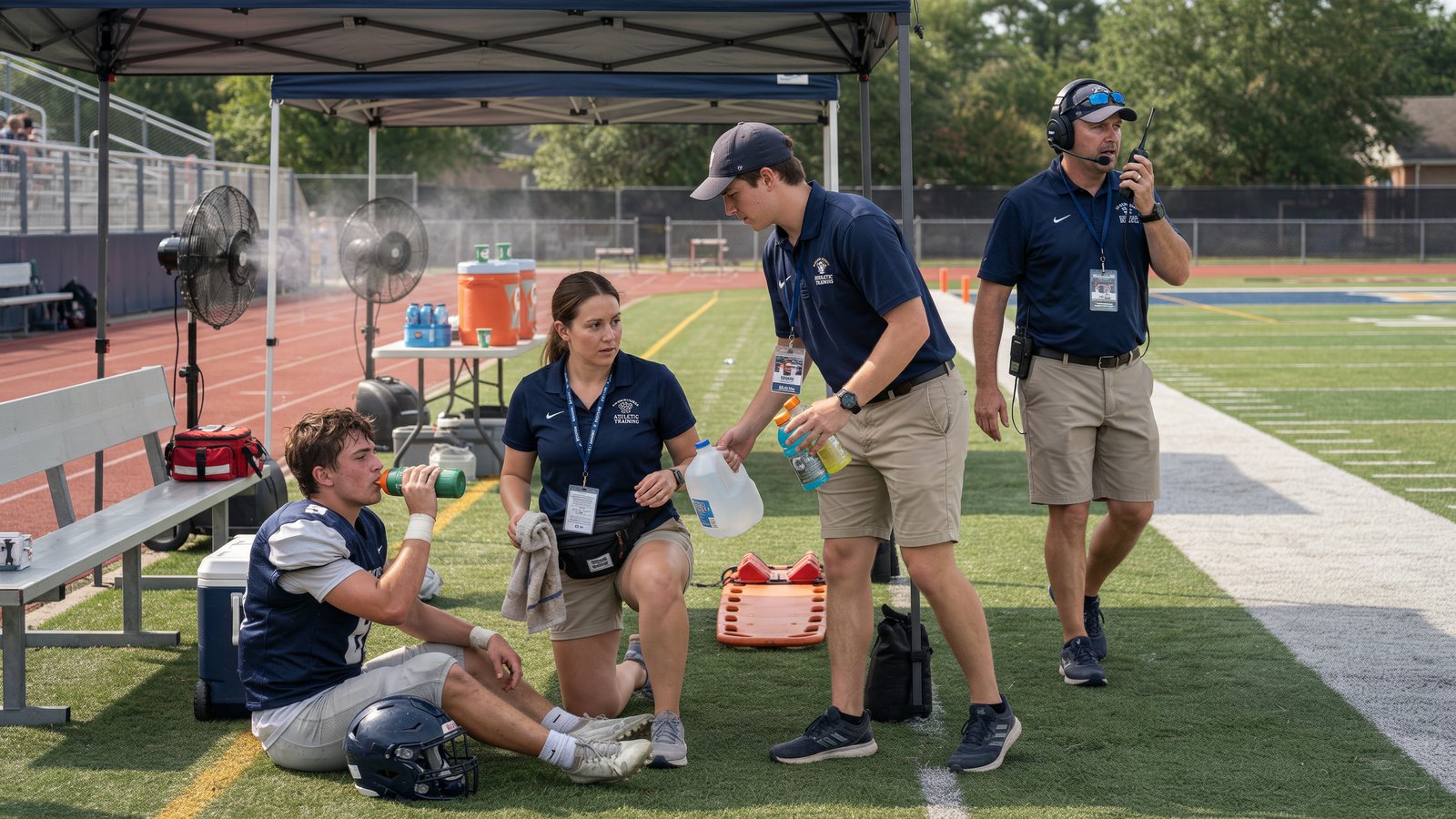
When an athlete collapses in the heat, the first few minutes decide a lot. They go best when every adult already knows their job. Here’s how to hand out those jobs before the first whistle.
On a rented field there’s often no athletic trainer, no staff who know the gate code, and a lot of parents who want to help but don’t know how. That’s fine, as long as the jobs are assigned ahead of time. Four roles cover it. Write a name next to each one before the day starts, plus a backup.
1. The cooler
This person starts cooling. They run the cooling setup, know where it is, and check before the first game that it’s set up and full, not packed in a car.
- Gets the athlete into cold-water immersion with ice agitation.
- Pulls off gear that comes off quickly. Never delays cooling to remove gear.
- Keeps cooling going. Doesn’t stop to wait for the ambulance.
2. The caller
This person calls 911, at the same moment cooling starts, not after. They should have the field’s address written down, not just the park name.
- Gives the address, the field number and the nearest entrance.
- Says it’s a possible heat stroke and that cooling has started.
- Stays on the line and passes along what the dispatcher says.
3. The runner
This person meets the ambulance and brings it in. At a big complex, finding the right field can take longer than the drive.
- Knows which gate or lot the ambulance should use, and whether a gate needs unlocking.
- Waits there and waves the crew in.
- Clears a path to the athlete.
If you rented the field, ask the owner before game day how emergency vehicles get in, and who has the gate key or code.
4. The family contact
This person reaches the athlete’s parent or guardian and keeps the crowd back so the cooler can work.
- Has the team’s emergency contact list on paper or on their phone.
- Calls the family and tells them where the athlete is being taken once EMS knows.
- Keeps other kids and spectators away from the cooling area.
What everyone should know
Exertional heat stroke is 100% survivable when it’s recognized fast and the athlete is cooled on the spot. Watch for an athlete who is confused, collapses, or isn’t acting like themselves in the heat. Then:
- Call 911 and start cooling at the same time.
- Start cooling within 10 minutes, using cold-water immersion with ice agitation.
- The goal is to bring the body to about 102°F within 30 minutes.
- Cool first, transport second.
Why it matters: around 104°F, the body loses its ability to regulate its own temperature. Cooling on the spot is what brings it back.
Practice it once
Before the season, or at the field before the first game, walk through it in a few minutes. Point to the cooling setup. Say the address out loud. Walk the runner to the gate. A plan people have practiced once is much easier to follow under pressure.
Put the names in writing
Add these roles to your emergency action plan so they’re there every game day. The free EAP Builder from National Stay Cool Day walks you through it and gives you a printable plan to keep at the field.
Take the next step: build your heat emergency action plan with our free heat safety tools, then sign up your school for National Stay Cool Day on April 8, 2027. Both are free.
