
 By Gamedayfields
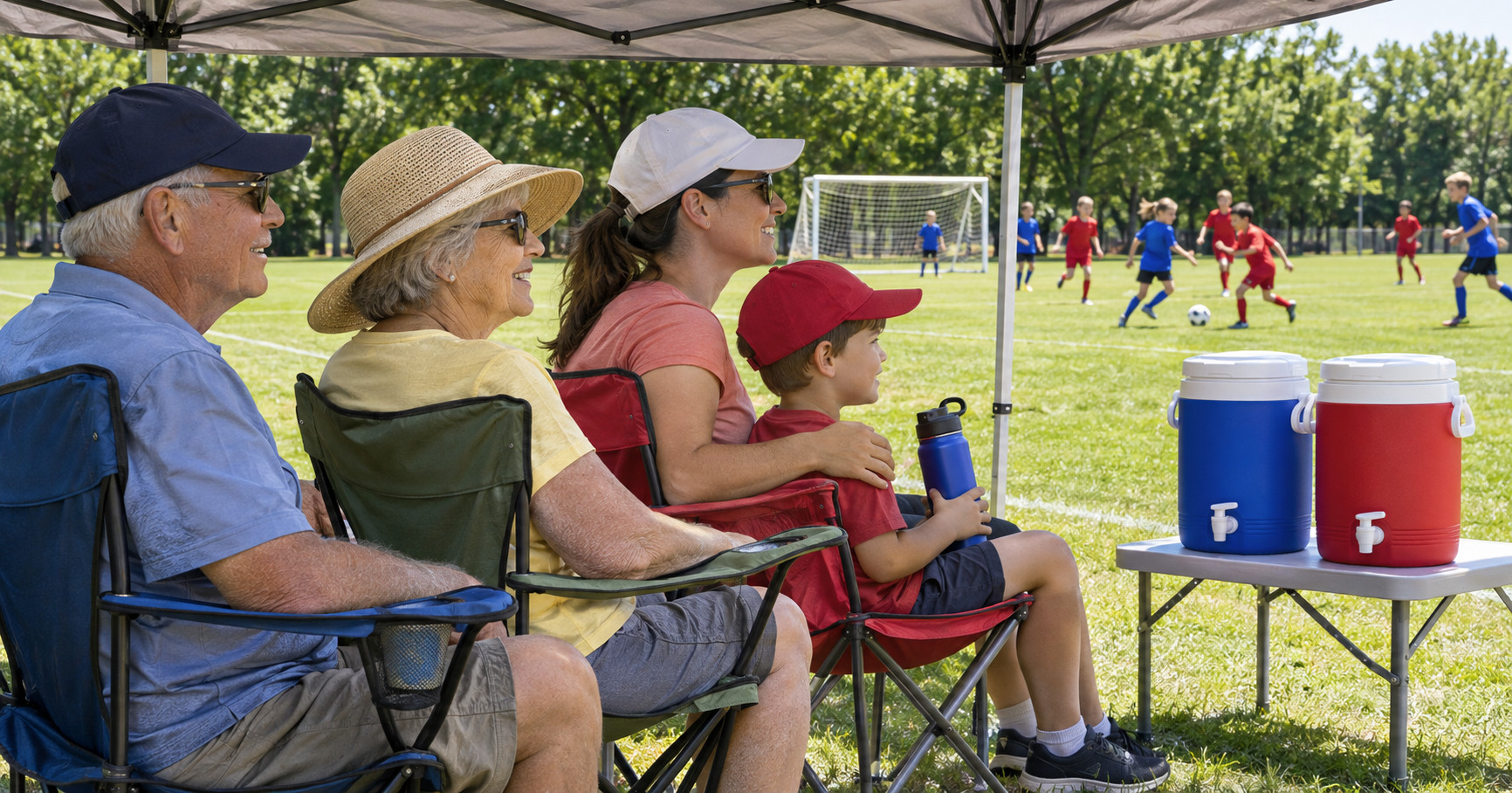
On a hot game day, everyone watches the players. Who is watching the crowd? Grandparents in folding chairs, babies in strollers, little brothers and sisters running around, parents standing in the sun for a doubleheader. On a rented field there is often no grandstand roof, no snack bar with air conditioning and no staff in charge of the fans. If the team does not plan for them, nobody does.
Heat hits the sideline too
Players get water breaks, shade and a coach checking on them. Spectators usually get none of that. They sit still in full sun for hours, and many of them forget to drink because they are not the ones working hard.
Some fans need extra care. The CDC says people 65 and older are more prone to heat-related health problems, and that babies and young children rely on adults to keep them cool and hydrated. Those are the people a youth game brings out: grandparents and younger siblings.
What organizers can set up before the first game
- Find the shade on the property before game day: trees, a pavilion, the side of a building. Tell families where it is.
- Put up a pop-up tent or two for fans, not only for the team bench.
- Know where fans can refill water. If the field has no fountain, bring a jug for the crowd that is separate from the team’s water.
- Know whether any building on the property is open and cool, and say so.
- Keep a clear path from the parking lot to the field so an ambulance crew can reach anyone, player or fan.
A short heat note for families
Send it the night before a hot game. Keep it to a few lines:
- Bring water for yourself, not only for your player.
- Bring a hat, a chair with a shade canopy or an umbrella, and light-colored clothes.
- Older relatives and small children should take breaks in the shade or in an air-conditioned car with the engine running and an adult inside.
- Never leave a child or a pet in a parked car, even for a few minutes, even with a window open.
Know the signs in anyone
A fan who feels dizzy, sick to their stomach or has a headache should move to the shade, drink water and rest. Do not leave them alone. Call 911 right away if anyone, fan or player, is confused, slurring words, passes out or stops acting like themselves. Move them to shade and start cooling them while you wait, and send someone to the entrance to lead the crew in.
When it is a player
Fans are often the first to see a player wobble or collapse on the far side of the field. Teach parents to shout for the coach, not walk over and wait. For a player who collapses in the heat, the steps are fixed:
- Call 911 and start cooling at the same time.
- Cooling should start within 10 minutes, using cold-water immersion with ice agitation.
- Cool first, then transport. The goal is about 102°F within 30 minutes.
Take off whatever gear comes off quickly, but never delay cooling to remove gear.
Around 104°F, the body loses its ability to regulate its own temperature. Exertional heat stroke is 100% survivable when it is recognized fast and the athlete is cooled on the spot. A crowd that knows where the cooling tub is, and keeps the path to it clear, helps that happen.
Put fans in the plan
Add one line about spectators to your game-day plan: where the shade is, where the water is and who helps if a fan gets sick. Keep it with your game-day heat kit and your 911 directions card. The free National Stay Cool Day EAP Builder can help you write it down, and every adult at the field should know the warning signs of exertional heat stroke.

[…] Day on a Rented Field: A Heat Plan for Ceremonies, Team Photos and Every Team at Once Fans on the Sideline: A Heat Plan for Spectators at a Rented Field After the Final Whistle: A Heat Plan for Pack-Up on a Rented Field Can the Ambulance Find […]