
 By Gamedayfields
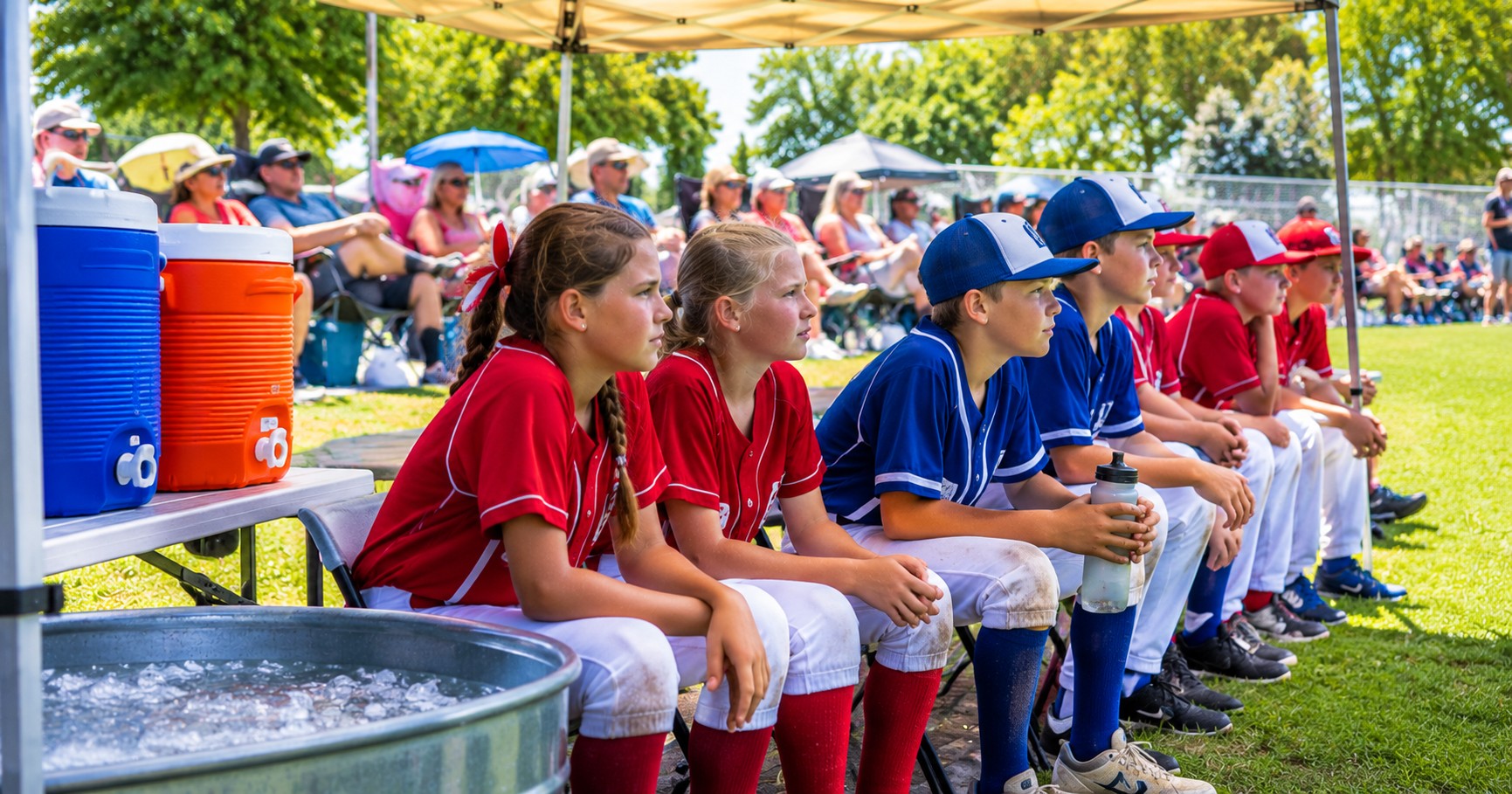
Opening day is the busiest, loudest, happiest day of the season. It is also one of the easiest days to get caught by the heat. Every team shows up at once. Kids stand in lines for photos and wait through a ceremony in full uniform. Coaches and volunteers are busy with a hundred small jobs. On a rented field, nobody owns the whole picture unless you plan for it.
Why opening day is different
- Most players have not had many hot practices yet, so their bodies are not used to the heat.
- There is a lot of standing still in the sun: lining up, waiting for names to be called, posing for team pictures.
- Kids wear full uniforms, and some wear gear, for an event where they barely play.
- The crowd is bigger than any other day. Parking lots fill up and the entrance gets blocked.
- Many of the adults are new volunteers who do not know where the water, the shade or the cooling tub is.
Plan the schedule around the heat
- Book the field for the coolest part of the day you can get, often early morning.
- Keep the ceremony short. Cut speeches, not water breaks.
- Run team photos in the shade or on a rolling schedule, so teams are not standing in one long line in the sun.
- Let players wait in the shade until it is their turn, then call them out.
- Have a backup plan for a hot forecast: an earlier start, a shorter program or moving the ceremony under a pavilion.
Set up before the gates open
- Shade for players and shade for families. Pop-up tents count.
- Water stations that every team can reach, with refills on hand, not only one cooler on one bench.
- A cooling tub set up in the shade, filled with ice water, close to the main field.
- One clear lane from the road to the field that stays open all day for an ambulance. Put a cone and a volunteer on it.
- The field address and the nearest cross street written down and taped to every team’s bench.
Put one person in charge of heat
On a busy day, everyone assumes someone else is watching. Pick one adult whose only job is heat: checking on teams in line, making sure water gets around, and knowing where the tub is. Tell every coach and volunteer who that person is at the start of the day.
Know the signs
A player who is dizzy, sick to their stomach, has a headache or looks wiped out should go to the shade, drink water and sit out. Do not leave them alone. Call 911 right away if a player is confused, slurring words, passes out or stops acting like themselves.
If a player collapses
A packed field can slow everything down. Decide ahead of time who calls, who runs for the tub and who walks to the entrance to meet the ambulance. For a player who collapses in the heat, the steps are fixed:
- Call 911 and start cooling at the same time.
- Cooling should start within 10 minutes, using cold-water immersion with ice agitation.
- Cool first, then transport. The goal is about 102°F within 30 minutes.
Take off whatever gear comes off quickly, but never delay cooling to remove gear.
Around 104°F, the body loses its ability to regulate its own temperature. Exertional heat stroke is 100% survivable when it is recognized fast and the athlete is cooled on the spot.
Start the season with a plan on paper
Opening day is a good day to hand every coach the same heat plan for the rest of the season. Pair it with your game-day heat kit and your 911 directions card, and make room for the fans on the sideline too. The free National Stay Cool Day EAP Builder can help you write it down, and every adult at the field should know the warning signs of exertional heat stroke.
