
 By
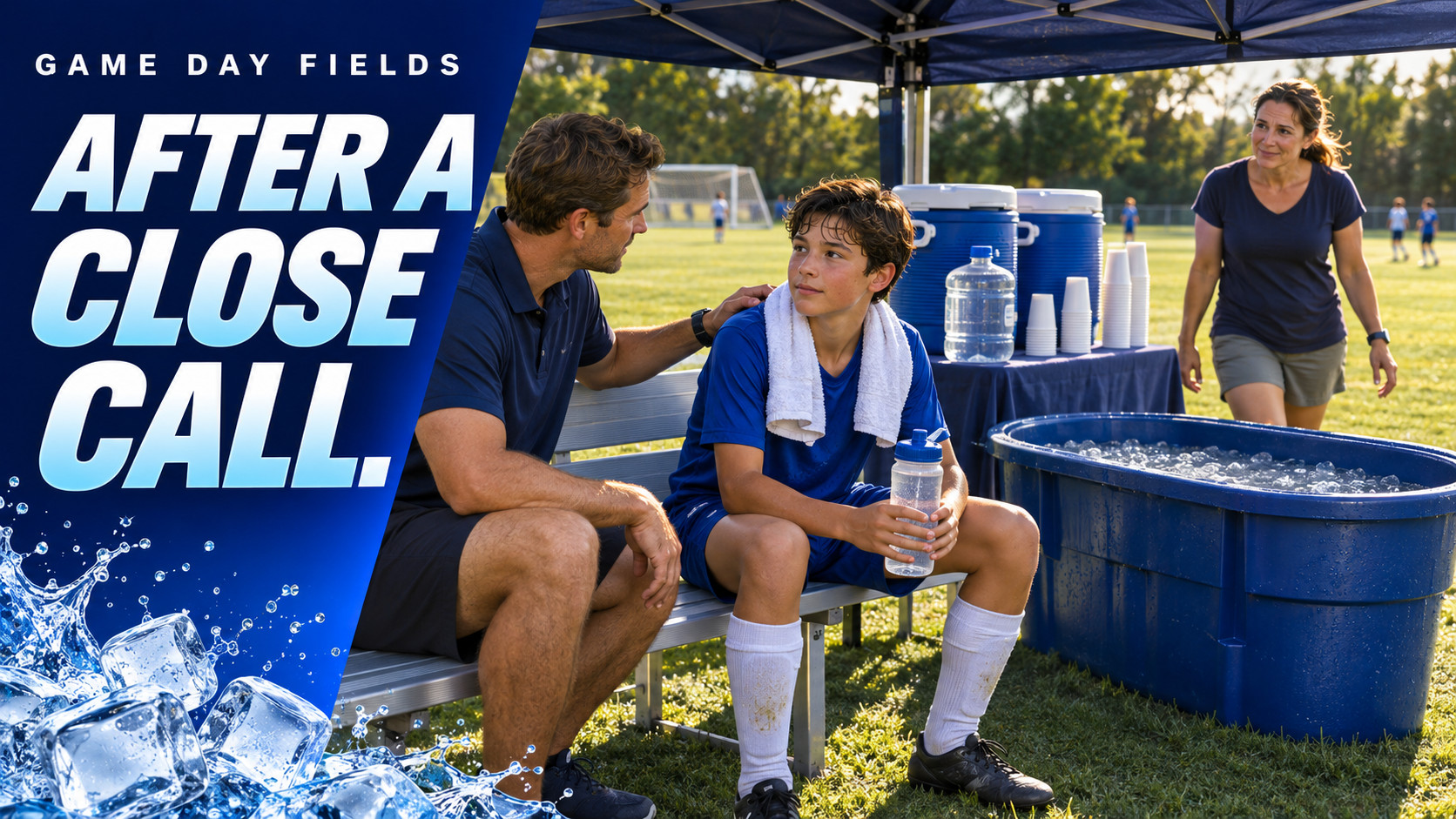
The game is over, everyone is packing up, and you are still thinking about one player. Maybe they got dizzy in the second half, sat down with a headache or just stopped looking like themselves for a few minutes. They rested in the shade, drank water and felt better. Nobody needed an ambulance. That is a close call, and what you do next matters as much as what you did in the moment.
First, be sure it was only a close call
A player who feels better after rest, water and shade is not the same as a player who is confused, slurring words or passing out. If you see any of those signs, it is no longer a close call. Call 911 and start cooling right away, using the steps at the bottom of this page. Do not wait to see if the player gets better on their own.
The rest of that day
A player who had trouble in the heat is done for the day. Keep them in the shade with an adult beside them, keep water in their hand and do not send them back in, even if they say they feel fine. When it is time to leave, hand them off to a parent or guardian in person. Do not let them walk to the parking lot alone or wait by themselves for a ride.
Talk with the family that day
Tell the parent or guardian what you saw, about when it happened and what you did. Keep it simple and calm. Let them know you are sharing so they can keep an eye on their player tonight, and that if they have any questions, the player’s own doctor is the right person to ask before the next practice. A family that hears it from you first will trust you more, not less.
Write down what happened while it is fresh
Before you leave the field, or as soon as you get home, take a few minutes to write it down:
- The time, and what the weather was like.
- What the team was doing when the player started having trouble.
- What the player said and what you noticed.
- What you did, and how long it took to get them water and shade.
- Anything that got in the way, like water that was too far off or a tent that was not up yet.
Notes like these help you fix the plan, and they help the next coach or parent who works with this team.
Tell the field owner if the field slowed you down
If something about the field made it harder to help, let the owner or manager know. Maybe the water was a long walk away, the shade was gone by mid-afternoon or a gate was locked. Field owners want to hear this, and a short, friendly note can make the field better for every team that rents it. Our guide to the far field covers what to plan for when water, shade and help are a long way off.
Talk with your team
Your players saw what happened, and some of them may be worried. At the next practice, keep it short. Do not single anyone out. Remind everyone that speaking up when they feel off is the right thing to do, and that they will never be in trouble for asking for a break. A player who spoke up early is the reason it stayed a close call.
Look at your plan before the next booking
A close call is a free lesson. Before your next game or practice on a hot day, ask a few honest questions:
- Were the water breaks often enough for the heat that day?
- Was the cooling tub filled and ready before play started?
- Did every adult know who calls 911 and who meets the ambulance?
- Would an earlier or later time slot have been cooler?
Make one or two changes and share them with the other coaches and parents. Our guides to game-day heat roles, when to book a field in the heat and putting your heat plan on one page can help.
A close-call checklist
Keep this in your bag so you know what to do after a scare:
- Watch for confusion, slurred words or passing out, and call 911 if you see them.
- Keep the player out for the rest of the day, in the shade with an adult.
- Hand the player to a parent or guardian in person.
- Tell the family what you saw and what you did.
- Write down what happened the same day.
- Let the field owner know about anything that slowed you down.
- Fix one or two things in your plan before the next booking.
Warning signs to watch for
A player who is dizzy, sick to their stomach, has a headache or looks wiped out should stop, drink water and rest in the shade with an adult beside them. Call 911 right away if a player is confused, slurring words, passes out or stops acting like themselves.
If a player goes down
If a player collapses in the heat, the adults on your team are the first responders until the ambulance arrives:
- Call 911 and start cooling at the same time.
- Cooling should start within 10 minutes, using cold-water immersion with ice agitation.
- Cool first, then transport. The goal is about 102°F within 30 minutes.
Take off whatever gear comes off quickly, but never delay cooling to remove gear.
Around 104°F, the body loses its ability to regulate its own temperature. Exertional heat stroke is 100% survivable when it is recognized fast and the athlete is cooled on the spot.
While one adult cools the player, another keeps the rest of the team together in the shade and away from the crowd, and the person named in the plan goes to the field entrance to meet the ambulance.
Free help from National Stay Cool Day
Use the National Stay Cool Day cooling station checklist to set up your own cool zone, and make sure every adult with the team knows the warning signs of exertional heat stroke.
Take the next step: build your heat emergency action plan with our free heat safety tools, then sign up your school for National Stay Cool Day on April 8, 2027. Both are free.