
 By
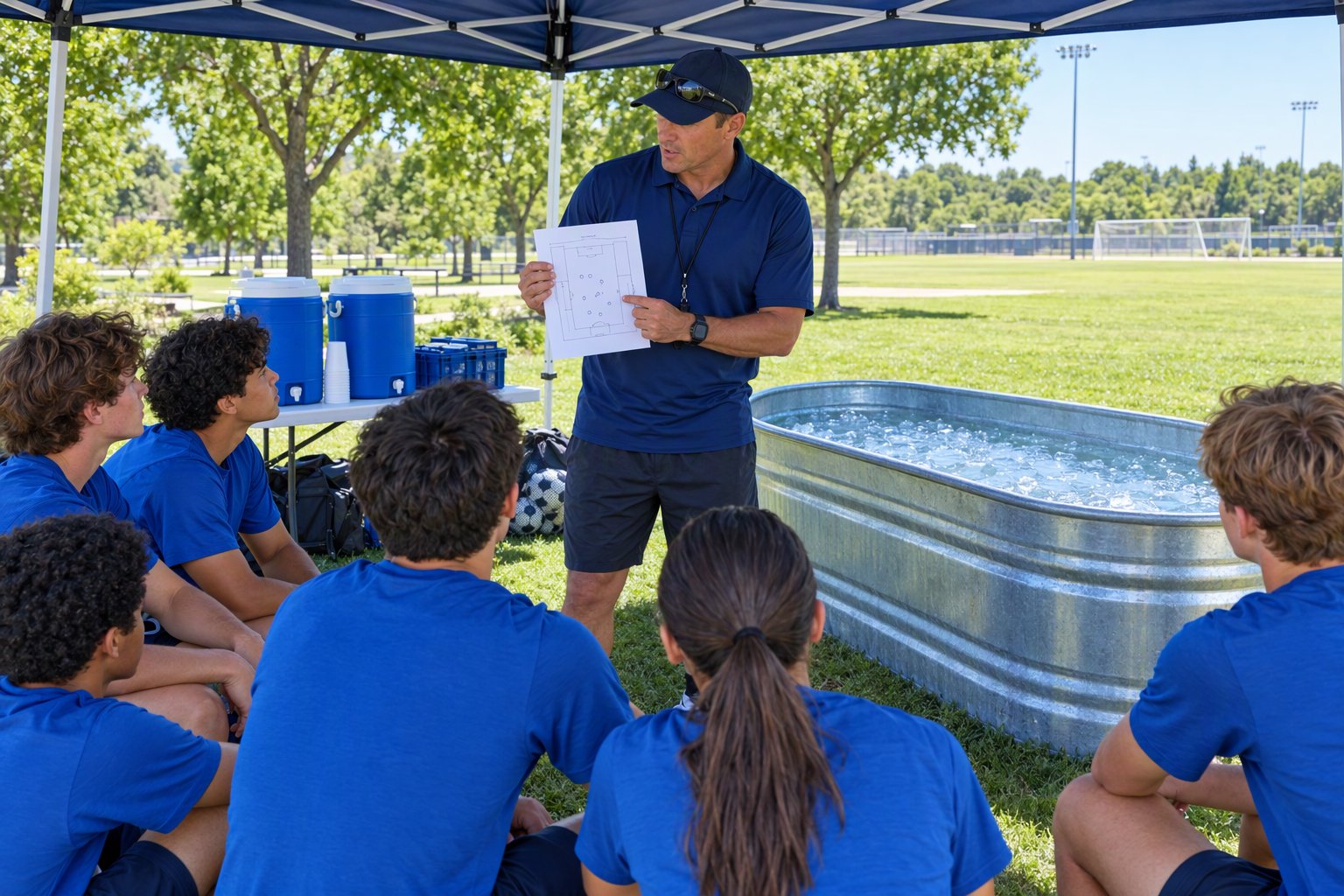
It happens to every team sooner or later. You booked the field, the other team is warming up, and only a handful of your players showed up. On a cool day, a short roster just means tired legs. On a hot day, it means the players who did come may have to run the whole game with no chance to sit down, and that is when heat becomes a real risk.
Why a short roster matters more on a hot day
Substitutions are one of the easiest ways to give a player a rest in the shade during a game. When you have no one on the bench, that rest goes away. Every player stays on the field for every minute, and the breaks you were counting on may never come. On a rented field there is often no athletic trainer and no field staff to notice a player who is fading, so it falls to the coach and the parents on the sideline.
Know your numbers before you leave home
The best fix starts the night before. Ask families to tell you by a set time whether their player is coming, and check the forecast at the same time. If you can see that you will be short on a hot day, you have options: call in a player from your own club if your league allows it, talk with the other coach about the plan or ask the field owner whether there is a cooler time slot open. Finding out at the field, with your rental clock already running, leaves you with far fewer choices.
Talk with the other coach and the referee
When you arrive short, say so right away. Ask whether you can add water breaks, run a slightly longer halftime or let players come off for a rest even if no one goes in for them. If your league or the field owner has rules about playing short, roster limits or borrowing players, follow them and make sure everyone knows what was agreed. Our guide to a quick heat talk before kickoff covers how to fit this into the pre-game meeting.
Make every stop in play a real break
With no bench, every pause counts. Keep water bottles, cold towels and shade as close to the field as the owner allows, so players can drink during an injury stop or a goal kick without a long walk. At halftime, get everyone into the shade right away instead of standing in the sun to talk. Our guide to cooling players down during halftime, timeouts and every break has more ideas for using each stop well.
Playing one player down is better than pushing a tired one
If a player looks wiped out, take them off and let them sit in the shade, even if it leaves your team one player down for a while. Tell your players before the game that this is the plan, so nobody feels they let the team down by asking for a break. Make it clear that saying “I need a minute” is always okay, and that you would rather lose a game than lose track of a player.
Keep an extra eye on every player
When everyone is playing the whole game, everyone is getting tired at the same time. Ask a parent on the sideline to watch your players on the field while you coach, and check in with each player at every break. Players on a short team may try to push through because they know no one can replace them. Our heat headcount and buddy system is an easy way to make sure no one goes unnoticed.
Know when to call it
Sometimes the safest choice is to shorten the game, turn it into a practice or stop for the day. That is not giving up. It is coaching. If the heat is climbing and your players are running out of energy with no one to rest them, talk with the other coach and the referee and decide together. Our guide to making the heat call explains how to decide ahead of time whether to play, change or move a hot game day.
A short-roster checklist
Keep this in your bag for the next time you come up short on a hot day:
- Confirm who is coming the night before, and check the forecast.
- Tell the other coach and the referee as soon as you arrive.
- Agree on extra water breaks and rest without a substitute.
- Keep water, cold towels and shade close to the field.
- Ask a parent to watch players on the field while you coach.
- Know where the cooling tub is, and who calls 911.
If you brought a tub, our guide to bringing a cooling tub to a rented field covers what to confirm with the field owner first.
Warning signs to watch for
A player who is dizzy, sick to their stomach, has a headache or looks wiped out should stop, drink water and rest in the shade with an adult beside them. Call 911 right away if a player is confused, slurring words, passes out or stops acting like themselves.
If a player goes down
If a player collapses in the heat, the adults on your team are the first responders until the ambulance arrives:
- Call 911 and start cooling at the same time.
- Cooling should start within 10 minutes, using cold-water immersion with ice agitation.
- Cool first, then transport. The goal is about 102°F within 30 minutes.
Take off whatever gear comes off quickly, but never delay cooling to remove gear.
Around 104°F, the body loses its ability to regulate its own temperature. Exertional heat stroke is 100% survivable when it is recognized fast and the athlete is cooled on the spot.
While one adult cools the player, another keeps the rest of the team together in the shade and away from the crowd, and the person named in the plan goes to the field entrance to meet the ambulance.
Free help from National Stay Cool Day
Use the National Stay Cool Day cooling station checklist to set up your own cool zone, and make sure every adult with the team knows the warning signs of exertional heat stroke.
Take the next step: build your heat emergency action plan with our free heat safety tools, then sign up your school for National Stay Cool Day on April 8, 2027. Both are free.