
 By
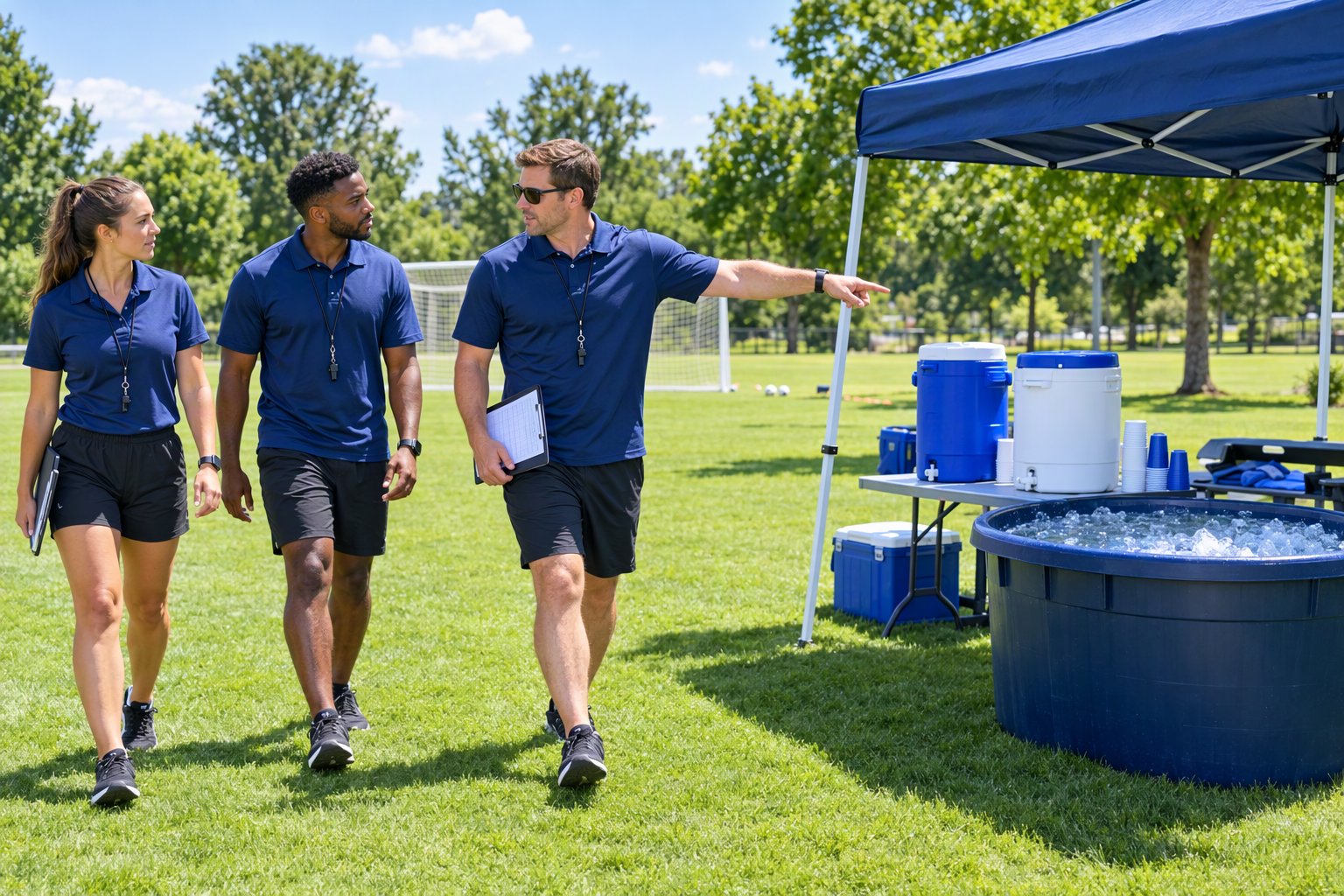
Before most games, the coaches shake hands and the referee checks the field. On a hot day, that short meeting is the best chance you will get to make sure every adult at the field is working from one heat plan. On a rented field, there is often no athletic trainer, no field staff and no one else who will bring it up. The two coaches and the officials are the people in charge, so take two or three minutes before kickoff and talk about the heat.
Why the pre-game meeting matters on a rented field
At a school stadium, the home team usually has a trainer, a cooling setup and a plan that everyone already knows. A rented field is different. The visiting team may never have been there. The home team may have only booked the field an hour ago. Each group tends to assume someone else has the heat covered. A short talk before the game turns those guesses into a plan that both benches and the officials share.
Show everyone where the cooling setup is
Start with the basics. Point out where the cooling tub is, where the ice and water are and where the shade is. If only one team brought a tub, say so out loud and agree that it is there for any player on the field, from either team. A cooling tub that one bench does not know about will not help a player on that bench. If you brought a tub, our guide to bringing a cooling tub to a rented field covers what to confirm with the field owner first.
Agree on who calls 911 and who meets the ambulance
Decide before the game which adult calls 911 if a player goes down, and make sure that person knows the field address and the entrance an ambulance should use. Name the adult who will walk out to the gate or the parking lot to guide the ambulance in. Rented fields can be hard to find, with a back gate, a shared lot or no clear street address. Our post on giving 911 directions to a rented field walks through what to have ready, and our guide to game-day heat roles lays out the other jobs, including who starts cooling.
Talk about breaks before the game starts
Ask the referee how they want to handle water breaks today. Agree on when the teams will get water, how players will get to the shade during stoppages and whether halftime can run a little longer if it is hot. Settling this before the game means nobody has to argue about it in the middle of a close second half. Our guide to cooling players down during halftime, timeouts and every break has ideas for using each stop well.
Agree that any adult can stop play for a player in trouble
Make one point clear to everyone in the meeting: if any adult sees a player who looks confused, unsteady or not like themselves, play stops and that player gets checked right away. It does not matter which team the player is on or which adult spots it. Saying it out loud before the game makes it easier for anyone to speak up later.
Decide what happens if the heat gets worse
Some days start warm and get much hotter by the second game. Talk about what you will do if conditions change: more breaks, shorter halves or stopping for the day. If your league or the field owner has its own heat rules, follow them and make sure the referee and the other coach know them too. Our guide to making the heat call explains how to decide ahead of time whether to play, change or move a hot game day.
Keep it short and make it a habit
None of this needs to take long. A quick list on your phone or a printed card in your bag can cover it in a couple of minutes:
- Where the cooling tub, ice, water and shade are.
- Who calls 911, and who meets the ambulance at the entrance.
- How water breaks will work today.
- Any adult can stop play for a player in trouble.
- What changes if the heat gets worse.
Our one-page heat plan for a rented field is easy to hand to the other coach and the referee. If you are hosting a scrimmage instead of a league game, our scrimmage day heat plan covers how two teams can share one plan.
Warning signs to watch for
A player who is dizzy, sick to their stomach, has a headache or looks wiped out should stop, drink water and rest in the shade with an adult beside them. Call 911 right away if a player is confused, slurring words, passes out or stops acting like themselves.
If a player goes down
If a player collapses in the heat, the adults on your team are the first responders until the ambulance arrives:
- Call 911 and start cooling at the same time.
- Cooling should start within 10 minutes, using cold-water immersion with ice agitation.
- Cool first, then transport. The goal is about 102°F within 30 minutes.
Take off whatever gear comes off quickly, but never delay cooling to remove gear.
Around 104°F, the body loses its ability to regulate its own temperature. Exertional heat stroke is 100% survivable when it is recognized fast and the athlete is cooled on the spot.
While one adult cools the player, another keeps the rest of the team together in the shade and away from the crowd, and the person named in the plan goes to the field entrance to meet the ambulance.
Free help from National Stay Cool Day
Use the National Stay Cool Day cooling station checklist to set up your own cool zone, and make sure every adult with the team knows the warning signs of exertional heat stroke.
Take the next step: build your heat emergency action plan with our free heat safety tools, then sign up your school for National Stay Cool Day on April 8, 2027. Both are free.
[…] on Players on a Hot Day: A Heat Plan When You Have No Subs on a Rented Field A Quick Heat Talk Before Kickoff: Getting Both Coaches and the Referee on One Plan at a Rented Fiel… A New Player Joins Mid-Season: Bringing Them Into Your Heat Plan on a Rented Field Dropped […]