
 By Gamedayfields
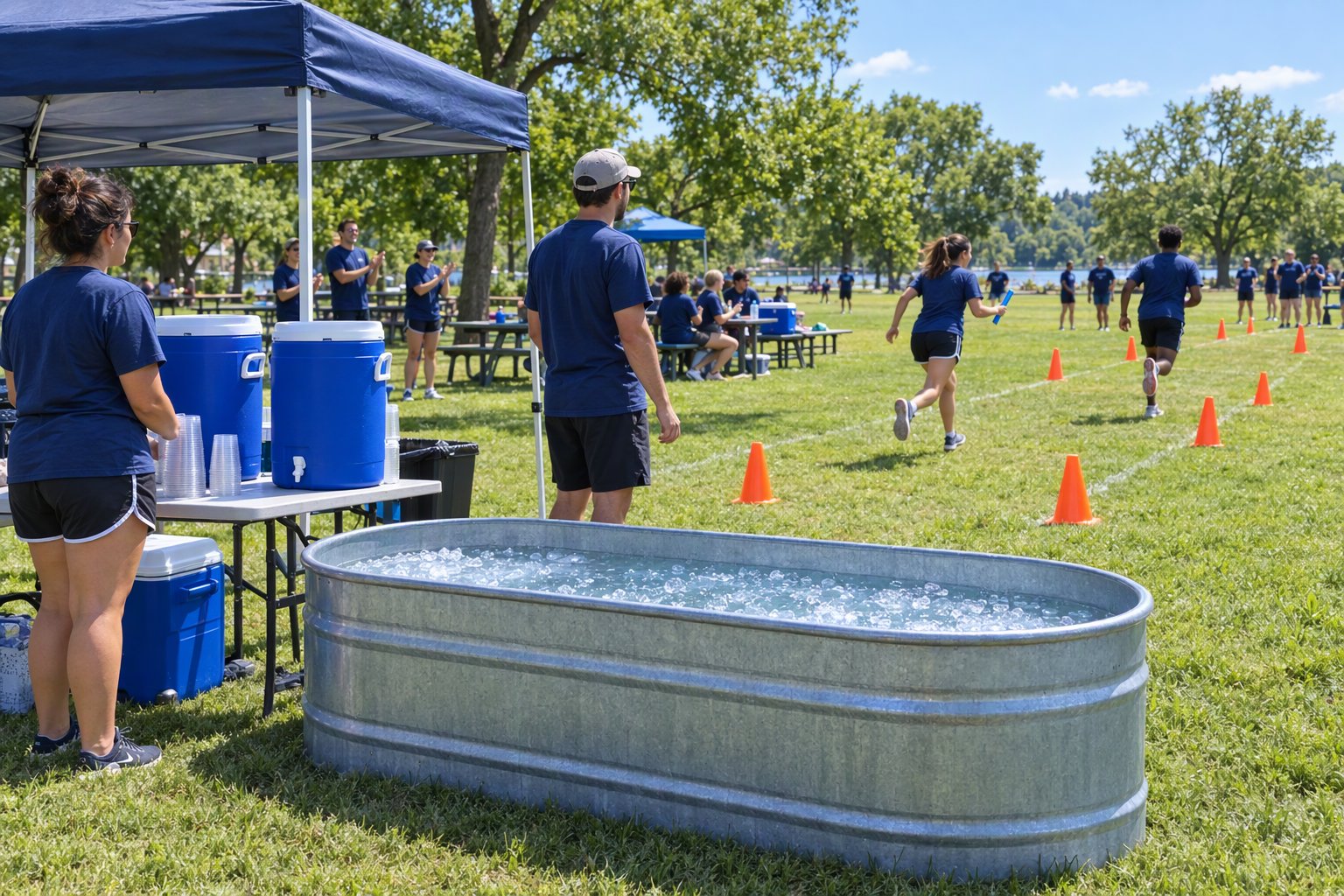
School field days, church games, youth clinics and neighborhood tournaments often land on the hottest weekends of the year. The people on the field may not be in shape for it, nobody may be in charge of safety, and the crowd can be bigger than anyone planned for. If you’re renting a field for one of these days, a little planning keeps the fun from turning into an emergency.
Why one-day events need their own plan
A team that practices all summer gets used to the heat over time. Kids at a field day and adults at a once-a-year game usually haven’t. They also tend to play hard, skip breaks and stay out in the sun between events. And unlike a league game, there’s often no coach or trainer whose job is to watch for trouble.
Before you book
- Pick the cooler part of the day. Morning slots are usually easier on everyone than early afternoon.
- Ask the field owner where the shade is, where water is on site and whether you can bring a tub and ice.
- Get the field’s street address and the best entrance for an ambulance. Write it down for your emergency plan.
- Decide ahead of time what you’ll change if it’s hot that day: shorter events, longer breaks, or moving some activities into shade.
Put one person in charge of safety
Choose one adult whose only job is heat safety. They don’t run a station or keep score. They watch the field, call breaks, run the cooling setup and make the 911 call if it’s needed. Give them a backup, and make sure every volunteer knows who they are.
Set up before the first event starts
- Shade for resting, close to the action, not back at the parking lot.
- A cooling station near the field: a tub, plenty of ice, water to fill it, and towels.
- Water for everyone, players and spectators, with easy refills.
- A posted note at the check-in table with the field address and who to find in an emergency.
Run the day with breaks built in
- Schedule rest between events instead of hoping people take it.
- Rotate groups so no one is in full sun for every activity.
- Keep the hardest running events early, before the hottest part of the day.
- Brief volunteers at the start: what to watch for and who to get.
Know the warning signs
People in trouble often don’t say so, and kids may not know how. Watch for anyone who seems confused or not like themselves, stumbles, falls behind or goes down. Get them out of the activity right away and bring the safety lead. Don’t wait to see if it passes.
If someone goes down
Exertional heat stroke is 100% survivable when it’s recognized fast and the person is cooled on the spot.
- Call 911 and start cooling at the same time.
- Start cooling within 10 minutes, using cold-water immersion with ice agitation.
- The goal is to bring the body to about 102°F within 30 minutes.
- Cool first, transport second.
Take off whatever gear comes off quickly, but never delay cooling to remove gear. Around 104°F, the body loses its ability to regulate its own temperature. Cooling on the spot is what brings it back.
Write the plan down
Before event day, put the field address, the safety lead, who calls 911 and where the cooling setup goes on paper. The free EAP Builder from National Stay Cool Day walks you through it and gives you a printable plan to hand to volunteers.
Take the next step: build your heat emergency action plan with our free heat safety tools, then sign up your school for National Stay Cool Day on April 8, 2027. Both are free.
