
 By Gamedayfields
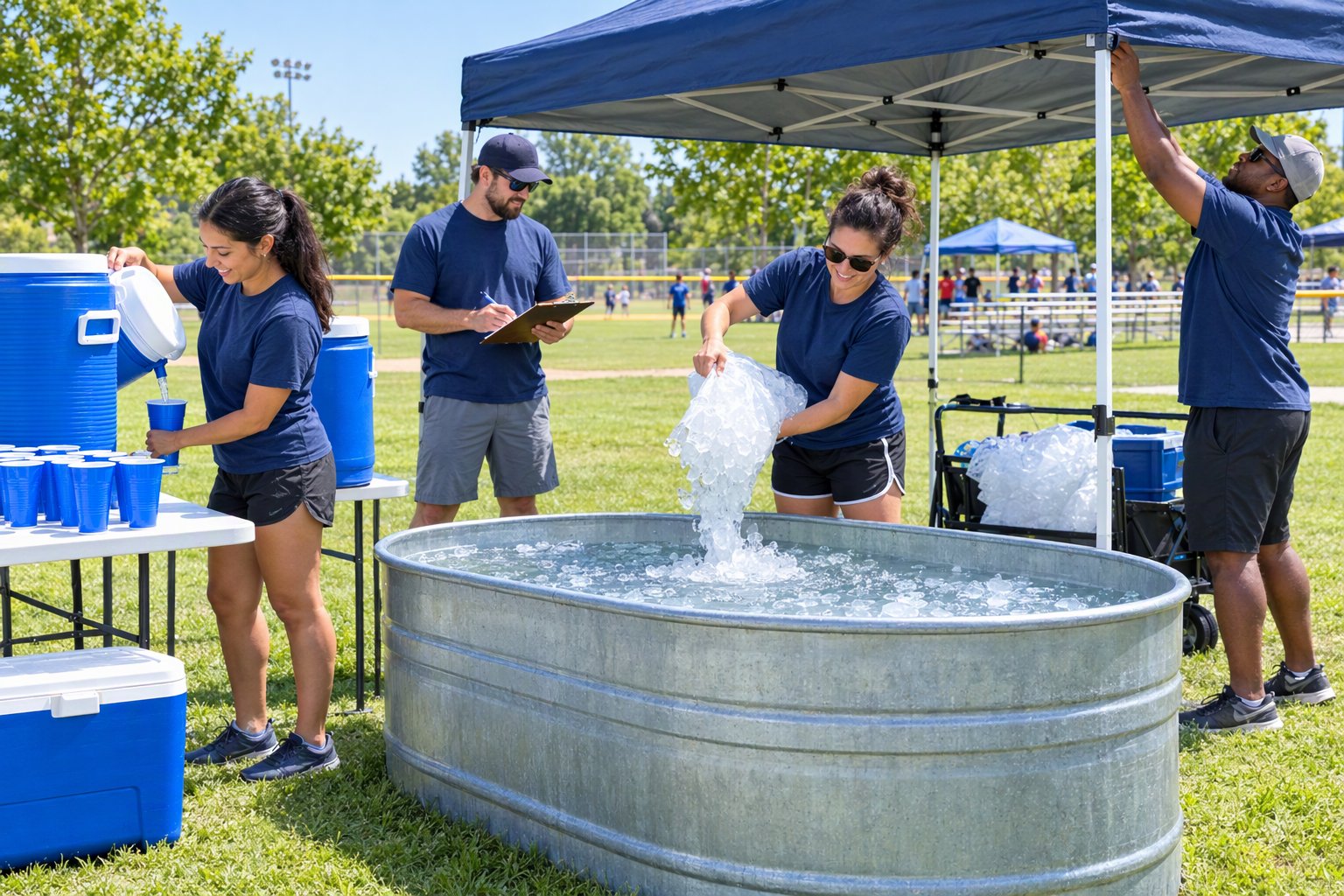
A tournament packs a lot of games, a lot of teams and a lot of hours into one hot weekend. The athlete most at risk is often the one on their third game of the day. Here’s how organizers can plan for that before the first bracket goes up.
A single game is easy to plan around. A tournament isn’t. Teams rotate across several fields, kids play in the late afternoon after playing all morning, and coaches change every hour. The plan has to cover the whole site and the whole weekend, not just one game.
Build the schedule with heat in mind
- Put the hottest hours to the lightest use you can. If games have to run midday, give teams more time between them.
- Avoid giving any one team three games in a row without a real break in the shade.
- Follow your league or governing body’s written heat policy, and decide ahead of time who can pause, shorten or move games when it’s hot.
- Leave room in the bracket so a delay doesn’t push everything into the worst part of the day.
One cooling setup per field, not per complex
If an athlete goes down on the far field, a single cooling tub by the parking lot is too far away. Plan for a cooling setup at every field in use, or close enough that it can be reached right away. Check that each one is set up and full before the first game each morning, and again after lunch.
Give every field its own jobs
With teams coming and going, don’t count on coaches to know the plan. Name the people who stay with each field all day:
- Someone who runs that field’s cooling setup.
- Someone who calls 911 and knows the field number and the nearest entrance.
- Someone who meets the ambulance at the right gate and brings the crew in.
Put the field numbers and the site address on a sheet at each scorer’s table. At a big complex, finding the right field can take longer than the drive. If you rented the site, ask the owner before the weekend how emergency vehicles get in and who has the gate key or code.
Shade and water between games
- Set up shade where teams wait between games, not just at the fields.
- Make water easy to find and easy to refill all day.
- Remind coaches that a kid who sat in the sun between games didn’t really rest.
Brief every coach at check-in
Each team checks in anyway. Use that moment to hand over a short card: where the cooling setup is for their field, who to find if a player is in trouble, and the steps below. It takes a minute and it means a coach who arrived at noon knows the same plan as one who arrived at 7.
What everyone should know
Exertional heat stroke is 100% survivable when it’s recognized fast and the athlete is cooled on the spot. Watch for an athlete who is confused, collapses, or isn’t acting like themselves in the heat. Then:
- Call 911 and start cooling at the same time.
- Start cooling within 10 minutes, using cold-water immersion with ice agitation.
- The goal is to bring the body to about 102°F within 30 minutes.
- Cool first, transport second.
Take off whatever gear comes off quickly, but never delay cooling to remove gear. Around 104°F, the body loses its ability to regulate its own temperature. Cooling on the spot is what brings it back.
Write it down before the weekend
Put the field-by-field roles, cooling locations and the gate plan into one emergency action plan, and keep a printed copy at every field. The free EAP Builder from National Stay Cool Day walks you through it and gives you a printable plan.
Take the next step: build your heat emergency action plan with our free heat safety tools, then sign up your school for National Stay Cool Day on April 8, 2027. Both are free.
