
 By Gamedayfields
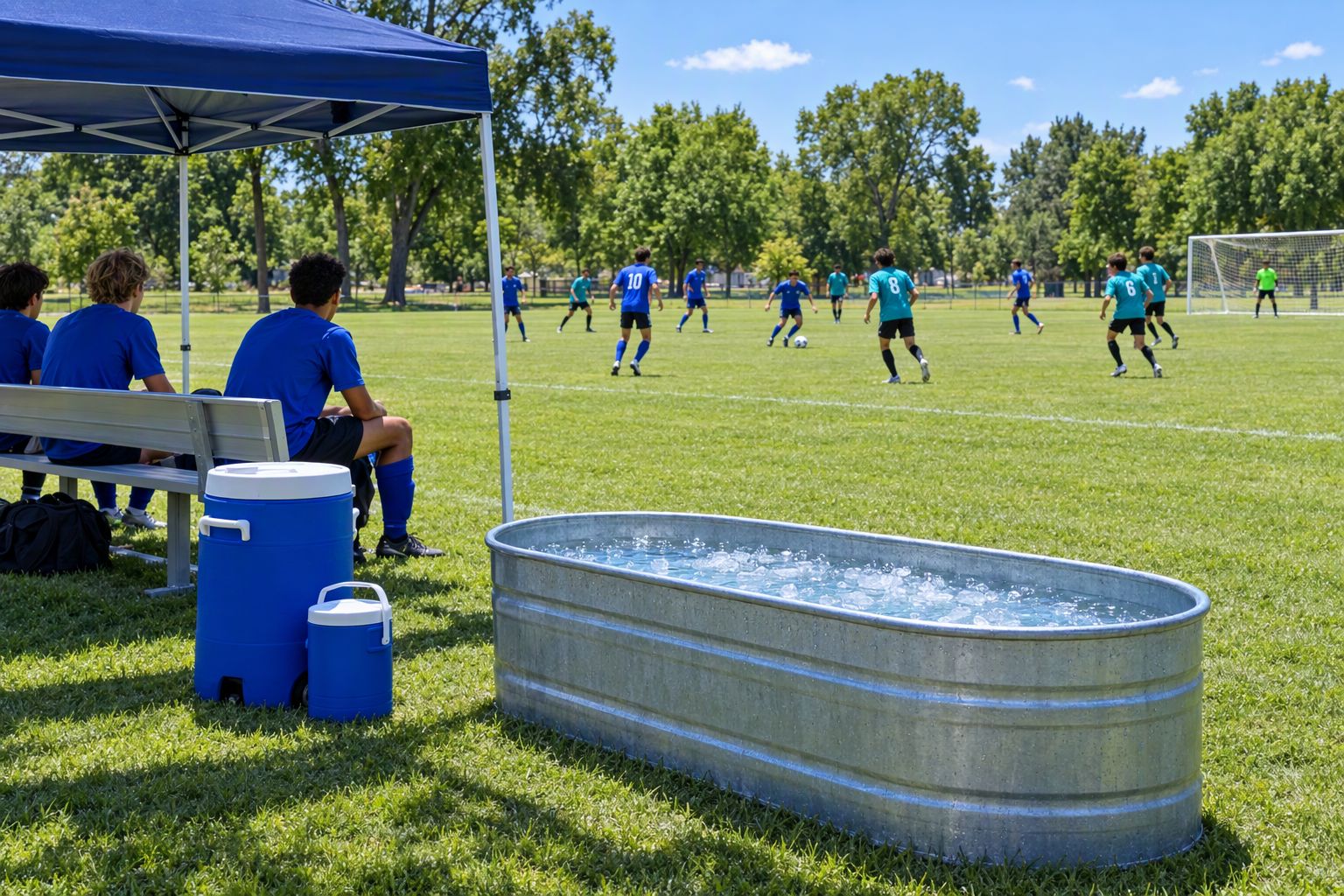
A scrimmage on a rented field brings two teams, two coaching staffs and two sets of parents to one place. Everyone assumes the other side has the heat plan covered. That is how a field ends up with plenty of adults, no cooling tub and nobody sure who is calling 911.
Why two teams on one field is its own risk
Scrimmages often land early in the season, before players are used to the heat. Coaches want to see everyone, so players stay on the field longer than they would in a game. The visiting team may not know the field, the address or where an ambulance would come in. And when something goes wrong, two groups of adults can each wait for the other to act.
Settle it before the booking
Whoever books the field should send the other coach a short message a few days out that covers:
- Who is bringing the cooling tub, ice and water, and where it will be set up.
- The exact field address, field number and the gate a vehicle would use to reach it.
- One person from each team who will handle an emergency for their own players, and one person who will call 911 and meet the ambulance at the gate.
- When the scrimmage starts and ends, and how breaks will work. On hot days, an earlier or later slot is worth asking the field owner about.
Agree on one plan for the field, not one plan per team.
At the field, before the first whistle
- Coaches from both teams meet for two minutes and walk to the tub together so everyone knows where it is.
- Fill the tub with water and ice before play starts, not after someone goes down.
- Say out loud who calls 911 and who goes to the gate.
- Make sure both benches have water and shade, not just the home side.
During the scrimmage
Build breaks into the schedule for both teams at the same time, so nobody feels they are giving something up. Watch every player on the field, including the other team’s. Stumbling, confusion, acting strange, collapsing, or a sudden drop in effort are signs a player is in trouble. Do not wait for a complaint. Early-season players trying to win a spot are the least likely to say something.
If a player goes down
Exertional heat stroke is 100% survivable when it is recognized fast and the athlete is cooled on the spot. It does not matter which team the player is on. The nearest adults start.
- Call 911 and start cooling at the same time.
- Start cooling within 10 minutes, using cold-water immersion with ice agitation.
- Cool first, then transport. The goal is about 102°F within 30 minutes.
- The person assigned to the gate meets the ambulance and walks the crew to the field.
- Reach the player’s own coach and parents, but do not stop cooling to do it.
Take off whatever gear comes off quickly, but never delay cooling to remove gear. Around 104°F, the body loses its ability to regulate its own temperature. Cooling on the spot is what brings it back.
Put it on one page
The free EAP Builder from National Stay Cool Day turns the address, field number, gate, phone numbers and cooling steps into a one-page emergency plan. Send a copy to the other coach with the scrimmage details, and bring a printed one to the field.
Take the next step: build your heat emergency action plan with our free heat safety tools, then sign up your school for National Stay Cool Day on April 8, 2027. Both are free.
