
 By Gamedayfields
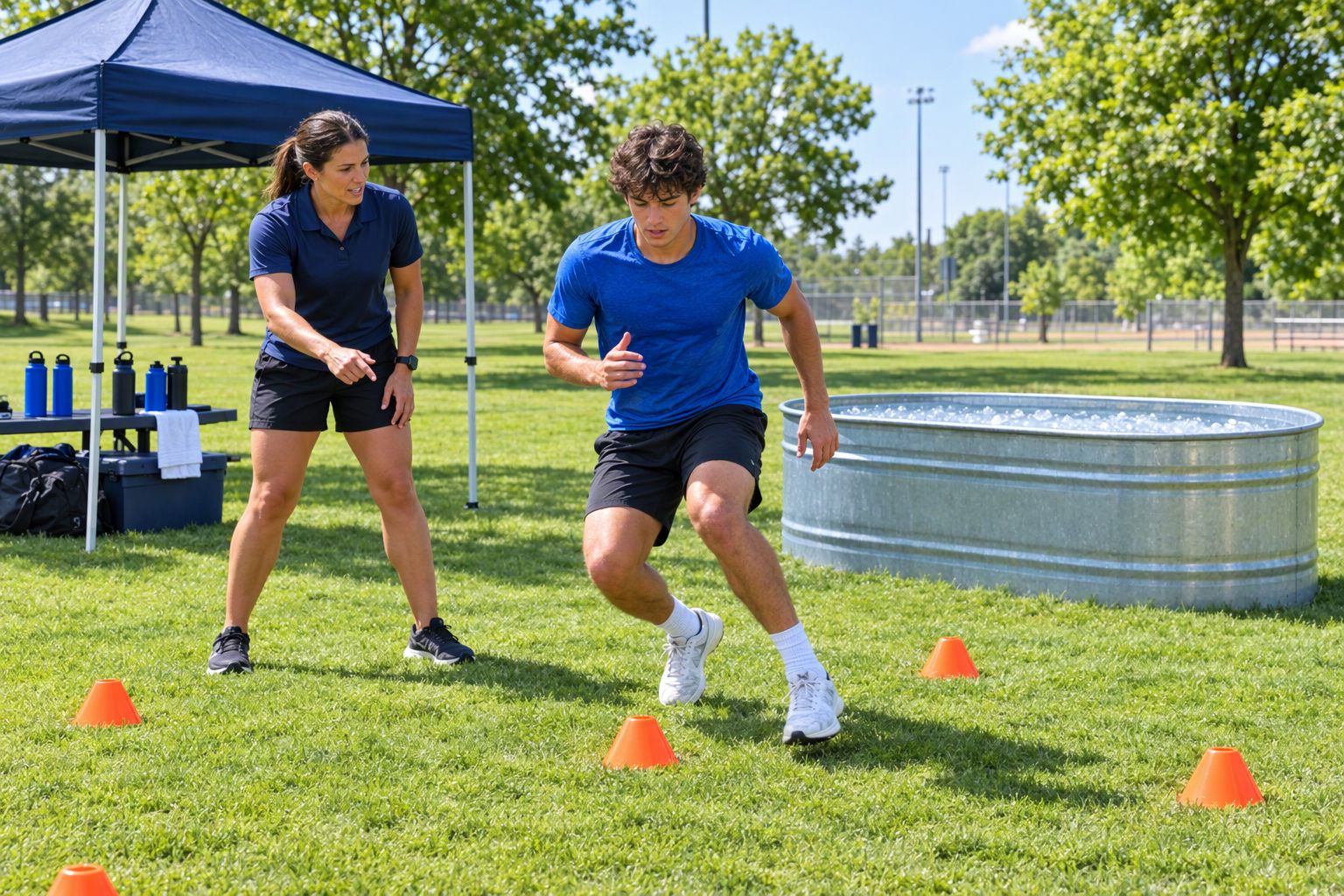
A private lesson or small-group session on a rented field looks low-risk. It is one coach, a few athletes and a bag of balls. But that setup is also where a heat emergency is hardest to handle. There is no assistant, no team parent on the sideline and often nobody else on the complex. If an athlete goes down, the person running the drills is also the person who has to call 911, start cooling and meet the ambulance.
Why small sessions carry their own heat risk
Small groups work hard. With two or three athletes there is no waiting in line between reps, so rest comes only when the coach builds it in. Sessions are often booked for the cheapest or only open slot, which can land in the hottest part of the day. And athletes paying for one-on-one time tend to push through feeling bad because they do not want to waste the hour.
Before you book
- Pick the earliest or latest open slot on hot days if your schedule allows it.
- Ask the field owner whether anyone else will be on site during your booking and whether there is shade or a working spigot near the field.
- Get the exact field address, field number and the gate a vehicle would use to reach it.
- Ask parents for a phone number that will be answered during the session, and whether the athlete has been sick, short on sleep or just back from time off.
What to bring when you are the only adult
- More water than the group will drink, kept on the field, not in the car.
- Ice and a cooling tub or other container big enough for cold-water immersion, set up near where you are working.
- A charged phone that stays on you, not in your bag across the field.
- A written plan with the address, field number and gate, so you are not looking it up during an emergency.
If a parent stays to watch, give them a job before you start: they call 911 and meet the ambulance at the gate while you cool the athlete.
During the session
Build breaks into the plan instead of waiting for someone to ask. Check in with each athlete by name. Watch for the signs that a player is in trouble: stumbling, confusion, acting strange, collapsing, or a sudden drop in effort that does not match the athlete you know. Do not wait for a complaint. Athletes in private sessions are often the least likely to say something.
If an athlete goes down
Exertional heat stroke is 100% survivable when it is recognized fast and the athlete is cooled on the spot.
- Call 911 and start cooling at the same time. Put the phone on speaker so your hands are free.
- Start cooling within 10 minutes, using cold-water immersion with ice agitation.
- Cool first, then transport. The goal is about 102°F within 30 minutes.
- Tell 911 the address, field number and gate. If another athlete is old enough, send them to the gate to wave down the ambulance.
Take off whatever gear comes off quickly, but never delay cooling to remove gear. Around 104°F, the body loses its ability to regulate its own temperature. Cooling on the spot is what brings it back.
Write it down before the first session
The free EAP Builder from National Stay Cool Day turns the address, field number, gate, phone numbers and cooling steps into a one-page emergency plan in your name. Print it, keep it in your training bag and bring it to every field you book.
Take the next step: build your heat emergency action plan with our free heat safety tools, then sign up your school for National Stay Cool Day on April 8, 2027. Both are free.
