
 By Gamedayfields
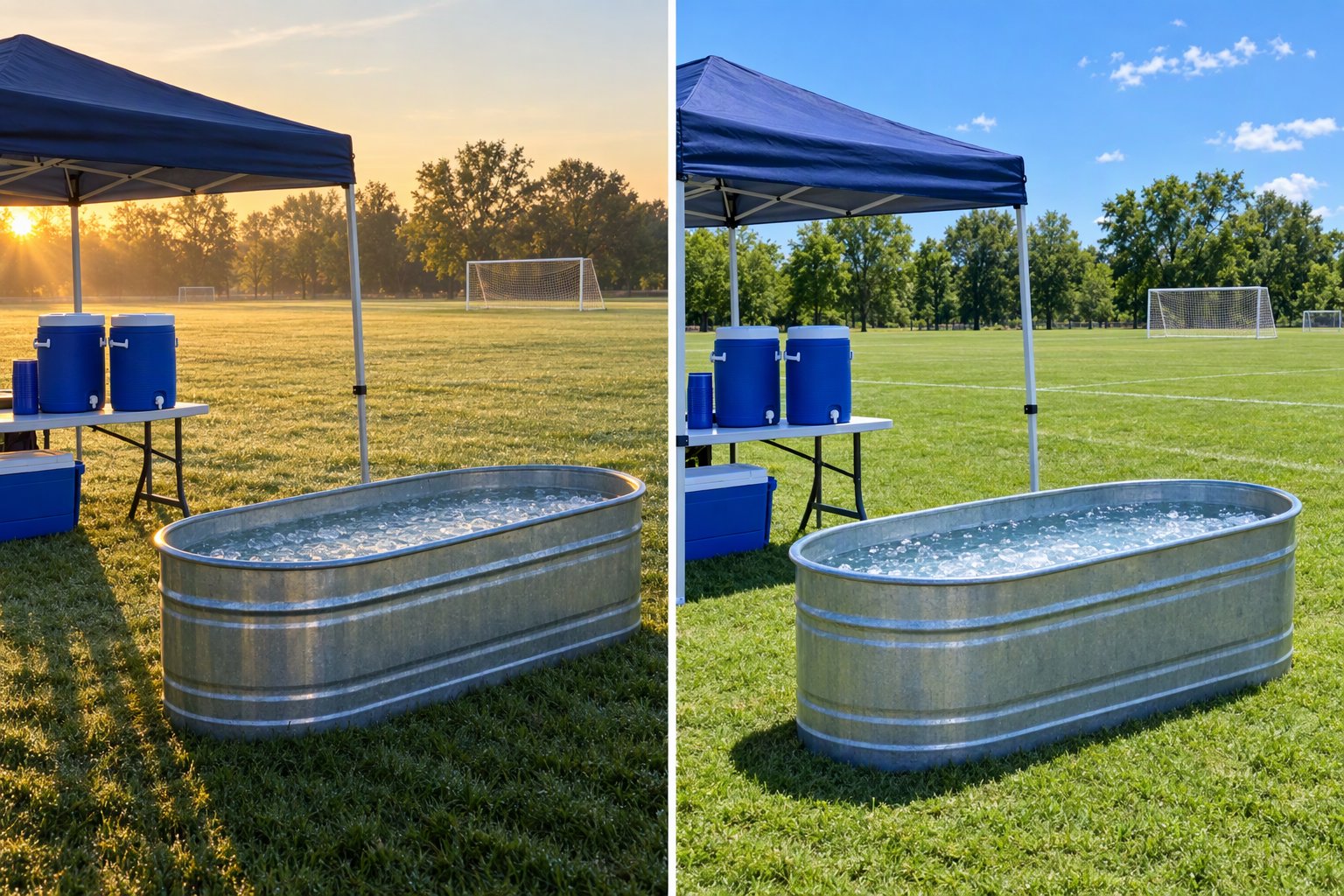
When you rent a field on a hot day, the clock on the booking is a heat decision, not just a convenience choice. The same field at 7 a.m. and at 1 p.m. can feel like two different places for the players who have to work on it.
Why midday hits harder
Midday puts the sun high overhead, so shade shrinks and the surface takes more direct heat. Turf and bare dirt hold that heat and give it back underfoot. Players who come straight from school, work, or a warm car are already warm before the first whistle. None of that means you can never book midday, it means you plan for it instead of treating noon like any other slot.
Early morning and evening tradeoffs
Early morning and evening usually bring cooler air and a lower sun. That helps, but it is not a free pass. You still need water, shade, and a written plan for who cools a player if someone goes down. Morning grass can be wet with dew, so footing and balls may behave differently until it dries. Evening light fades, so know when the lights cut out and leave time for a controlled wrap-up, not a scramble.
What to ask the field owner when you book
- Where is the shade, and is any of it usable during the hours you want?
- Is there working water on site, or do you need to bring your own?
- Can you set up a tub and ice near the sideline?
- How does an ambulance get onto the property, and what is the street address to give 911?
If midday is all you can get
Keep the session shorter than you would on a cooler slot. Build in more breaks before anyone asks for one. Have cooling ready before the first whistle: ice, a tub or cooler, and a named adult whose job is to watch for heat trouble. Cut back on full gear and long conditioning when the sun is highest. If a player looks off, stop that player early rather than waiting to see if they “tough it out.”
If a player goes down
Exertional heat stroke is 100% survivable when it’s recognized fast and the player is cooled on the spot.
- Call 911 and start cooling at the same time.
- Start cooling within 10 minutes, using cold-water immersion with ice agitation.
- The goal is to bring the body to about 102°F within 30 minutes.
- Cool first, transport second.
Take off whatever gear comes off quickly, but never delay cooling to remove gear. Around 104°F, the body loses its ability to regulate its own temperature. Cooling on the spot is what brings it back.
Put the plan with the booking
Before game day, write down who calls 911, where cooling goes, and the field address. The free EAP Builder from National Stay Cool Day walks you through it so you can print a plan and keep it with the team bag, useful whether you booked dawn or midday.
Take the next step: build your heat emergency action plan with our free heat safety tools, then sign up your school for National Stay Cool Day on April 8, 2027. Both are free.
