
 By Gamedayfields
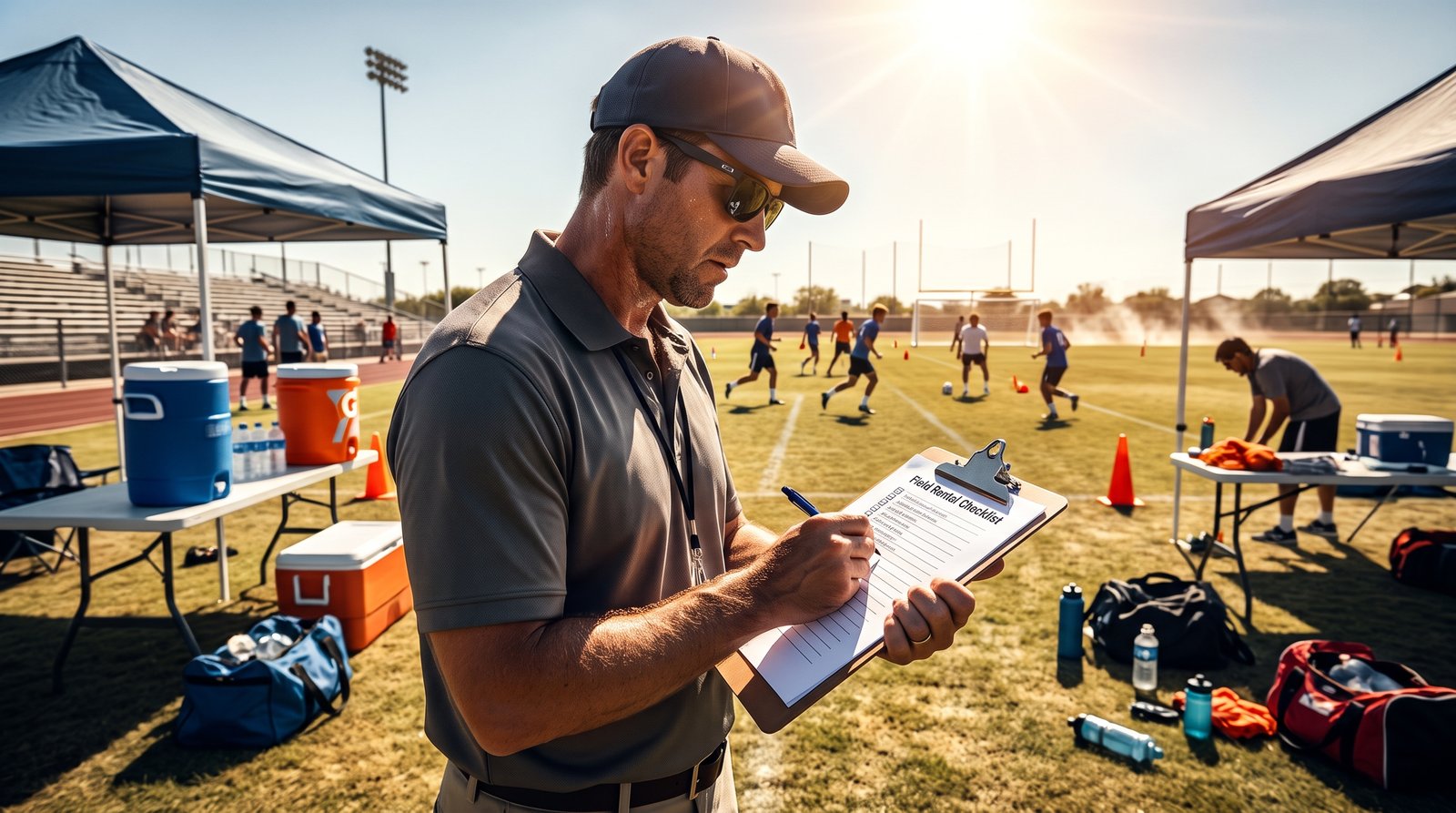
You booked the field. Now make sure everyone on it can get through a hot day safely. Here’s what to sort out before the first whistle.
Most rented-field events don’t have an athletic trainer on site. A tournament director, a coach or a parent ends up being the first responder. Heat illness doesn’t give much warning, so the plan has to be in place before anyone needs it.
The good news: exertional heat stroke is 100% survivable when it’s recognized fast and the athlete is cooled on the spot. Almost everything below is about making that possible at a field you don’t know well.
Before you book
- Look at the time slot. On hot days, early morning and evening slots are easier on athletes than midday. If the field has lights, a later start is an option.
- Check for shade. Bleachers, dugouts, a covered pavilion or trees near the bench area all help. If there’s none, plan to bring pop-up tents.
- Ask about water. Find out if there’s a working spigot or fountain near the field, or plan to bring all the water you’ll need.
- Ask about restrooms and parking. Long days in the heat go better when people can get out of the sun and move easily.
Know how help gets in
A lot of fields sit behind locked gates, inside parks or behind schools. That’s a problem if an ambulance can’t find you.
- Write down the field’s street address, not just the name of the park or complex.
- Save the gate code and the owner’s contact from your booking confirmation where every coach can see it.
- Pick one person to meet the ambulance at the entrance and walk the crew in.
- Find the closest emergency room before game day.
Bring a cooling setup
If an athlete has heat stroke, cooling them on site is what saves them. The rule is cool first, transport second.
- A tub or large container big enough to put an athlete in, plus water to fill it.
- Plenty of ice, in coolers, kept in the shade.
- Towels, and a way to keep the tub close to the field.
- A thermometer and a phone that’s charged and has signal.
Set it up before warmups, not after someone goes down.
Know what to watch for
Pull an athlete right away if they’re confused, stumbling, acting strangely or collapse. Don’t wait to see if they get better on the bench.
At 104°F, the body loses its ability to regulate its own temperature. That’s why speed matters so much.
If an athlete goes down
- Call 911 and start cooling at the same time. One person calls, everyone else cools.
- Start cooling within 10 minutes. Put the athlete in cold water with ice agitation, keeping their head above water. Take off whatever gear comes off quickly, but never delay cooling to remove gear.
- Keep cooling. The goal is to bring their temperature down to about 102°F within 30 minutes.
- Cool first, then transport. Let the EMS crew know cooling is already under way when they arrive.
A note for field owners
Teams trust that your field is ready for them. A few small things make a big difference on hot days:
- Post the field’s street address and the nearest entrance for emergency vehicles where renters will see it.
- List shade, water and restrooms in your listing so organizers can plan.
- Make sure the gate code and your contact go out with every booking.
- Keep emergency access lanes clear of parked cars.
Free tools to make your plan
National Stay Cool Day has free tools to build an emergency action plan and a heat rules card for your team. Find them at nationalstaycoolday.com.
Take the next step: build your heat emergency action plan with our free heat safety tools, then sign up your school for National Stay Cool Day on April 8, 2027. Both are free.
This checklist is general safety information, not medical advice. Follow your league’s and state association’s heat rules.
